
Although it is now possible to enjoy music on smartphones, the built-in speakers and earphones of smartphones are focused on compactness and portability, so there are limits to the sound quality.
Get a more fulfilling music experience,High-FidelityIf you are looking for the best possible music playback, please consider the following audio equipment.
You can only enjoy limited sound quality with your smartphone's built-in speakers or earphones.High-FidelityIn order to pursue music playback, you may want to consider an external speaker system or high-resolution headphones.
External speaker system:

An external speaker system connected to a smartphone can provide a richer sound field and more powerful sound. There are also models that support wireless connectivity and Bluetooth, so choose one that suits your convenience and environment.
Click here for the speaker product page
https://exclusive-audio.jp/collections/e2
Choosing headphones or earphones:
It's important to choose high-quality headphones or earphones to enjoy your music more deeply. Choose one that is particular about sound quality and fit, depending on your tastes and genre of music. To play high-resolution sound sources, high-resolution compatible headphones are required. Hi-Res headphones can play music in higher resolution and a wider frequency range, providing a more detailed and immersive music experience.
Click here for the headphones product page
https://exclusive-audio.jp/collections/e7
In-ear monitor (custom earphones):

In-ear monitors are individually made to fit the shape of your ear, offering both high sound quality and a comfortable fit. Often used by audio enthusiasts and professional musicians, they can enjoy more precise music playback.
Click here for the in-ear monitor product page
https://exclusive-audio.jp/collections/e6
USB-DAC:

A USB-DAC (digital-to-analog converter) enables higher-quality music playback by connecting your smartphone to headphones or speakers. By converting your smartphone's digital signal to an analog signal, you can enjoy clearer and more accurate sound quality.
A USB-DAC (Digital-to-Analog Converter) serves the role of converting digital audio sources from smartphones, computers, and other devices into analog signals. When the built-in DAC or audio output of a smartphone can only provide limited sound quality, using an external USB-DAC enables high-quality music playback.

Since USB-DACs process digital signals, they are equipped with higher-performance converter chips and circuits compared to built-in DACs. This allows for more accurate digital-to-analog conversion, enhancing the subtle nuances of music and the expressiveness of the soundstage. Some models also feature special clock circuits and power circuits to suppress noise and jitter.
USB-DACs are easy to connect to smartphones and computers, typically via a USB cable. Some models also support wireless connections (Bluetooth or Wi-Fi). Additionally, there are models equipped with analog output terminals, optical digital output terminals, and even balanced connection terminals for connecting to headphones or speakers.
By using a USB-DAC, you can enjoy music playback from smartphones and computers with high-quality, clear sound. It brings out the details and expressiveness of music, providing an immersive listening experience. Choosing the appropriate USB-DAC and optimizing the connection environment can lead to greater enjoyment and satisfaction with music.
Here is the product page for USB-DACs.
https://exclusive-audio.jp/collections/b1
By using these audio devices, you can significantly improve the quality of music playback on your smartphone. You will be able to feel the detailed nuances and emotions of music, allowing you to pursue a richer music experience.
Furthermore, by preparing additional audio equipment, you can enjoy a higher-quality and more fulfilling music experience. The following are points to consider when selecting audio equipment.
Speaker Systems:

To express music richly, an excellent speaker system is necessary. For home use, consider floor-standing or bookshelf speakers, evaluating factors such as soundstage, resolution, and bass reproduction quality when making your selection.
Floor-standing Speakers:
Floor-standing speakers are large speakers installed on the floor, characterized by a wide frequency range and powerful bass reproduction. Through the acoustic effects of large cabinets and the arrangement of multiple driver units, they can recreate a realistic soundstage. However, attention must be paid to installation space and budget constraints.
Click here for the product page of floor-type speakers.
https://exclusive-audio.jp/collections/e1
Bookshelf Speakers:
Bookshelf speakers are small speakers installed on bookshelves or dedicated stands. Despite their compact size, they achieve clear sound quality and a spacious soundstage. Additionally, they are often more budget-friendly compared to floor-standing speakers.
Click here for the product page of bookshelf speakers.
https://exclusive-audio.jp/collections/e2
When choosing a speaker system, focus on the characteristics of the sound. Important factors include resolution, transient response, soundstage width and imaging, and the quality of bass reproduction. It is recommended to listen and compare according to music genres and personal preferences.
Also, consider the size and acoustic environment of the room where the speaker system will be installed. By arranging and adjusting speakers according to the room's size and reverberation characteristics, you can achieve an optimal soundfield. Additionally, consider the appropriate distance and angle between the speakers and the listening position.
Preamplifiers and Power Amplifiers:

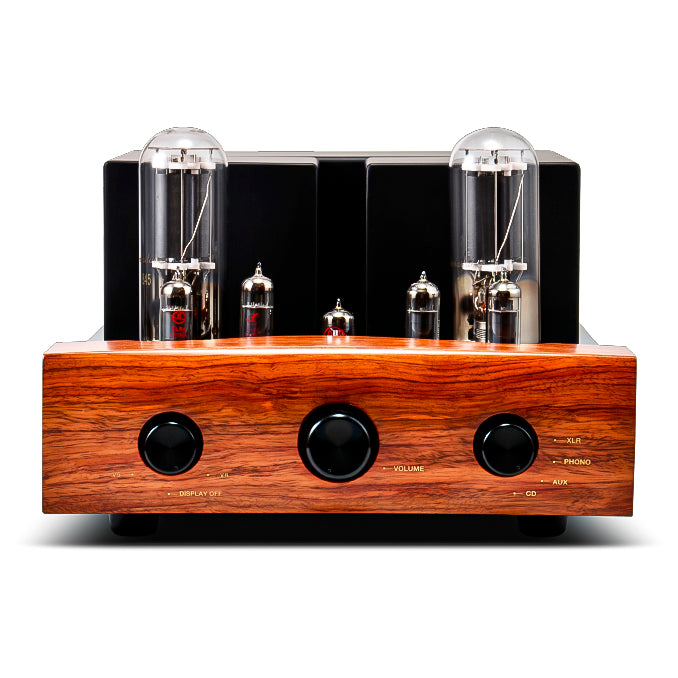
To enhance the driving capability of an audio system, consider introducing a preamplifier or power amplifier. Take into account the amplifier's output, sound characteristics, and connectivity to select one suitable for your system.
A preamplifier amplifies the audio signal from source devices (such as CD players, turntables, etc.) and sends it to the power amplifier. Additionally, preamplifiers have functions such as volume adjustment, input switching, and tone control. When choosing a preamplifier, consider the number of inputs, output levels, sound characteristics, and features.
Click here for the product page of preamplifiers.
https://exclusive-audio.jp/collections/a2
A power amplifier greatly amplifies the signal from the preamplifier and drives the speakers. Important factors include the power output, class (A, AB, D, etc.), and stability with respect to impedance. Choose a power amplifier that matches the characteristics of your speakers to achieve appropriate output and sound quality.
Click here for the product page of power amplifiers.
https://exclusive-audio.jp/collections/a3
The compatibility and matching of the preamp and power amp is also important. Choosing the optimal combination by considering signal transmission and impedance consistency will lead to improved sound quality. Combining products from the same brand or series is one way, but you should also consider combining them with other brands and models.
When choosing a preamplifier or power amplifier, consider whether you want to prioritize sound quality or functionality. High-quality audio components are designed and selected with a focus on sound quality, but additional functionality and connectivity are also important factors. It is important to find a balance that suits your needs and budget.
Preamplifiers and power amplifiers are important parts of the core of your audio system, so be sure to choose and listen to them carefully. We also recommend seeking advice from an audio shop or an expert.
Cables and connection parts:

Proper cables and connections are important for sound transmission.high quality speaker cableBy choosing the correct audio cable, plug, etc., you can improve sound quality such as sound clarity and dynamics. Pay attention to the cable's thickness, material, and internal structure. It is also important to set the cable length appropriately.
Click here for speaker cable
https://exclusive-audio.jp/collections/h4
Audio cables are used to connect sound source devices (smartphones, CD players, etc.) to amplifiers, headphones, etc. It is important to choose high-quality audio cables as this will affect the quality of signal transmission. Pay attention to the quality of the shield structure, conductor material, and connections.
Click here for the audio cable product page
https://exclusive-audio.jp/collections/h3
The plugs and connectors used to connect speaker cables and audio cables are also important elements. Choose durable, high-quality plugs and connectors to minimize signal loss and poor connections. Gold-plated or silver-plated connectors can improve the quality of signal transmission.
Click here for cable accessories
https://exclusive-audio.jp/collections/h6
Cable length and placement also affect sound quality. Extra length, wrapping, and crossing can cause signal loss and noise. Make sure to arrange them in a straight line with the minimum necessary length.
Room acoustics:
The acoustic environment also has a big impact on the music experience. Consider using acoustic panels, diffusers, and proper placement to improve the acoustics of your room. The placement of the speakers also has a large effect on the formation of the sound field. Maintain an appropriate distance between the speakers and your listening position, and adjust the positions of the speakers and their angles in relation to your listening position. It is also important to consider reflected sound and avoid reflections from walls, furniture, etc.
When choosing audio equipment, you need to consider factors such as budget, personal preference, and usage environment. We recommend using specialized audio shops (like ours!) and evaluation sites to choose the audio equipment that suits you. This will result in a higher quality and more immersive music experience.