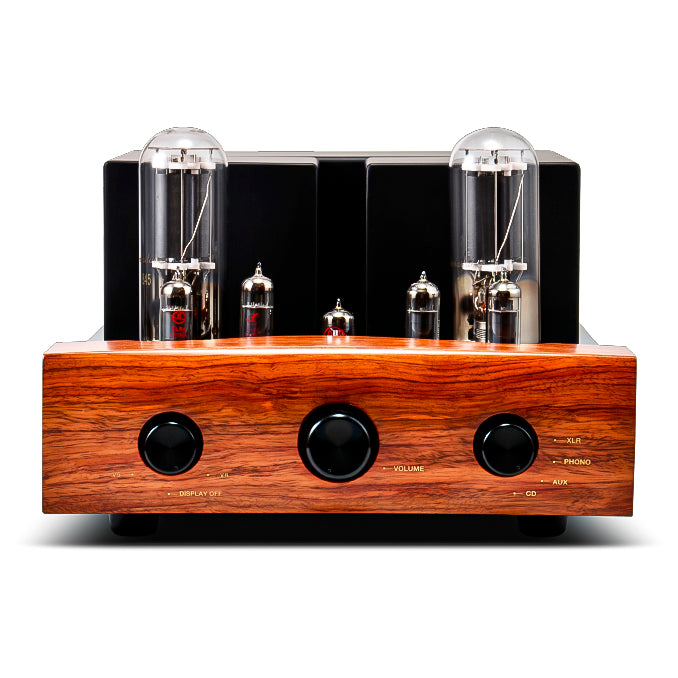

Bakoon ProductsSATRI-LINK, which uses current signals, is the biggest feature of SATRI-LINK, which is an absolute advantage that can only be utilized by models equipped with SATRI-LINK, which converts current signals to current signals.
Audio equipment that uses general voltage signals cannot withstand the high voltage of current signals, so it has been impossible to enjoy noiseless music signals with a huge amount of information without signal dropouts.
but. .
Bakoon ProductsFinally, a current transmission transceiver was born! !
each
SATRI-LINK reception adapter SRX-1001
The product page ishere
SATRI-LINK transmission adapter STX-1001
The product page ishere

This is good news for those who are equipped with SATRI-LINK but cannot use current transmission because the connected device does not have SATRI-LINK.
To be honest, since RCA cables are used for transmission and reception on the adapter side, it is not perfect current transmission, so it is not possible to achieve perfect current transmission with a bidirectional SATRI-LINK equipped device. . We recommend short, high-grade RCA cables.
However, the difference in sound quality between the current transmission and voltage transmission of this adapter becomes larger as the distance between the cables of the equipment becomes longer than 1 meter, so it is worth using!
PersonallySATRI-LINK transmission adapter STX-1001I think the best option is between a DA converter or phono equalizer using a SATRI amplifier. This is because the amplifier side can receive music signals as current transmission.
Power supply is required and requires DC5V or USB power supply. If you want to take advantage of SATRI-LINK's current signals using devices other than Bakoon, please give it a try! !
Of course, it can also be used with devices that use current signals other than SATRI-LINK.