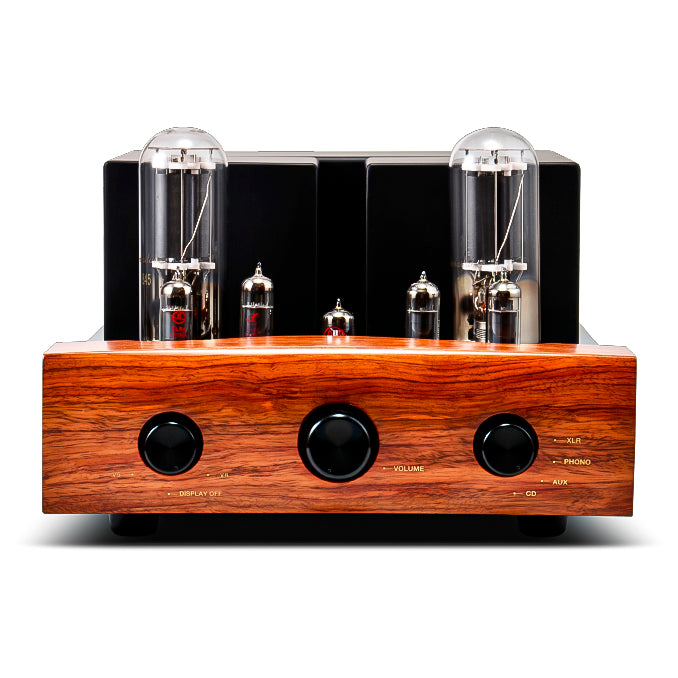

When starting audio, along with the amplifier, speakers are unavoidable.
In audio, there is a commonly mentioned guideline about how to allocate money, called the '5-3-2 rule.'
Specifically, it seems to be 50% on speakers, 30% on amplifiers, and 20% on players. In other words, the performance of the speakers comes first! Even if you buy an expensive amplifier, it doesn’t mean much if the speaker performance is low. To use a racing car as an analogy, even if it has a high-performance engine, it cannot go fast on the track without tires that have enough grip, which directly contact the road surface. Similarly, even if the engine (amplifier) is good, if the tires (speakers) that transmit to the road (ears) are inferior, you cannot go fast (hear good sound).
To enjoy a higher-quality musical life, it is very important to choose speakers suited to your purpose. Prices and shapes vary, but you should firmly grasp your own points and select accordingly.
Types of Speakers — How to Choose by Size and Basic Shape —
Bookshelf Type
As the name 'bookshelf' suggests, these are speakers made to fit on a bookshelf, featuring compactness and ease of installation. They are relatively small and suitable for close listening on a desktop. Ideally, use stands or similar to bring the units as close to ear level as possible. In terms of sound quality, many types are weak in bass, but they provide clear mid-to-high range sound with excellent three-dimensionality.

Floor Type
These are medium or larger speakers that are used directly on the floor. They are shaped like a larger version of a bookshelf speaker. Being large, they take up space, but they can reproduce a wide range from bass to treble. They are recommended for those who want to play loud music in a large room or want a full-fledged speaker system, though most are quite expensive.

Tallboy Type
Among floor types, these are vertically long speakers that do not take up much floor space. They are easy to place and often have stylish designs, making them attractive speakers. In terms of sound quality, they cover a wide range of frequencies and, particularly, have the bass performance of a floor-type speaker. They are versatile and among the most popular speaker types.

Speakers that have a hole in the enclosure are called bass-reflex type. They emit low-frequency sound from this hole to increase the sense of bass. On the other hand, those without holes are sealed type.

About speaker specifications
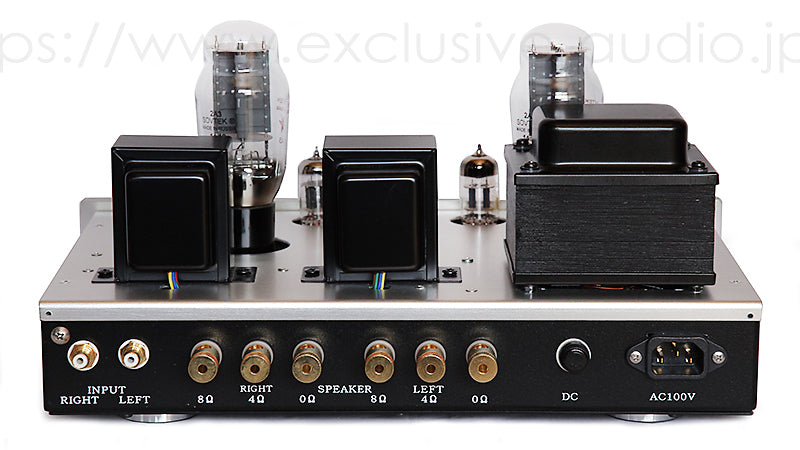
The efficiency of converting the power input from the amplifier to the speaker into sound is called the output sound pressure level or sensitivity. The value is around the low 80s dB to around 100 dB. The higher this number, the louder the sound can be even with a low amplifier output. In the past, large speakers with a high sensitivity of over 100 dB were common in order to play small output tube amplifiers of 2 or 3 W at high volume. However, nowadays, because there are various high-output amplifiers other than tube amplifiers, speakers with high sensitivity are generally around the high 80s to around 90 dB. As a guideline, if you want to play loudly in a large room or if you are using a tube amplifier with low output, speakers with 85 dB or higher are optimal. In other conditions, it is not usually a problem to worry about.

Most speakers have two or more speaker units. This is because it is difficult to accurately reproduce the human audible range (20 Hz–20 kHz) with a single unit, so the sound is divided across different frequency ranges. The overlap of the frequency range reproduced by each speaker unit is called the crossover. Increasing the number of units can make the sound connection unnatural or the distribution of sound sources can disrupt the balance of sound, so the majority typically have two or three units. Also, full-range speakers, which deliberately use only one unit, are popular because they offer natural sound quality and good localization, even if the frequency range is narrow. High-resolution audio sources require playback capable of over 40 kHz in the high-frequency range. CDs roughly record only the range audible to humans. High-resolution audio sources record a wide range of frequencies in detail, beyond the human audible range (20 Hz–20 kHz). Maybe it's a return to the way records used to be, haha. Even if the speakers are not compatible, it doesn't mean you cannot listen to high-resolution audio or that the sound will be worse. As proof, there are many expensive speakers with a high-frequency range around 20 kHz. This is because they prioritize making the sound rich and pleasant in the audible range by the best possible means, focusing more on output sound pressure level and sensitivity.

And finally, there is something called impedance. It is a value that represents the electrical resistance, with the unit Ω (ohms), and it is usually one of 4, 6, or 8Ω. The lower the value, the higher the amplifier’s output, but the greater the strain on the amplifier. In the case of a 4Ω speaker, it is safe to use an amplifier that supports 4Ω. Speakers with an impedance of 6 or 8Ω can be used without concern with any amplifier.
If you feel that the low frequencies are insufficient when listening to music, you can add a subwoofer, which is a speaker dedicated to bass. If you feel the high frequencies are lacking, you can add a tweeter, a speaker for high tones, to upgrade the sound to your liking, which is one of the joys of audio.
Let’s choose speakers while considering the combinations above, the amplifier you use, and the installation space!
Finally, speakers priced up to around 50,000 yen sound as their price suggests, but for example, even small speakers that cost more than 100,000 yen are designed and engineered to more than make up for the specifications listed, producing sound that is astonishingly better than imagined.
TRI PHONIC MONITOR-061 6cm Full-Range Speaker
Product page here

Yamamoto Sound Craft 8cm Full-Range TQWT Speaker System YS-08TQ
Product page here

FAL Supreme S C40ES Desktop Speaker
Product page here